OFFSHORE WIND PHASE II
Regional Offshore Wind Strategy and Roadmap Phase II
Building on the Regional Offshore Wind Strategy and Roadmap, Phase II advances a country level assessment to identify a regional lighthouse opportunity for offshore wind in the Caribbean.
Implemented By
Caribbean Centre for Renewable Energy & Energy Efficiency (CCREEE)
Funded By
UK Foreign, Commonwealth and Development Office (UK FCDO)

Regional Offshore Wind Strategy and Roadmap: Advancing the Caribbean's Energy Transition
The Regional Offshore Wind Strategy and Roadmap (ROWSAR) was developed to support CARICOM Member States in advancing a green energy transition through the exploration and development of offshore wind. As Small Island Developing States with extensive maritime resources, Caribbean countries may have significant offshore wind potential. Harnessing this resource can diversify national renewable energy mixes, foster blue and green economy opportunities, and strengthen energy resilience.
ROWSAR takes a phased approach to advancing offshore wind across the Caribbean. Phase I conducted a regional assessment to identify offshore wind development corridors and countries with the strongest potential and enabling conditions. Building on these findings, Phase II aims to identify and validate a single “Lighthouse Project” site, a flagship offshore wind development that can demonstrate regional potential and serve as a replicable model for wider deployment across the Caribbean.
An integral commitment of ROWSAR is to build regional capacity alongside each phase through training and knowledge exchange, equipping regional stakeholders with the knowledge, skills, and resources needed to support the advancement of the region’s offshore wind sector.
Strategic Program Pillars
Capacity and Expertise
Building Regional Offshore Wind Capacity through strengthened technical expertise, skills and Industry knowledge to support context-specific offshore wind exploration and development.
Partnerships and Regional Dialogue
Fostering collaboration among regional stakeholders, industry developers and international partners to advance knowledge exchange and build an enabling environment for offshore wind development.
Evidence and Investment Readiness
Developing robust resource assessments and project pipelines to significantly lower barrier thresholds for incoming international green capital.
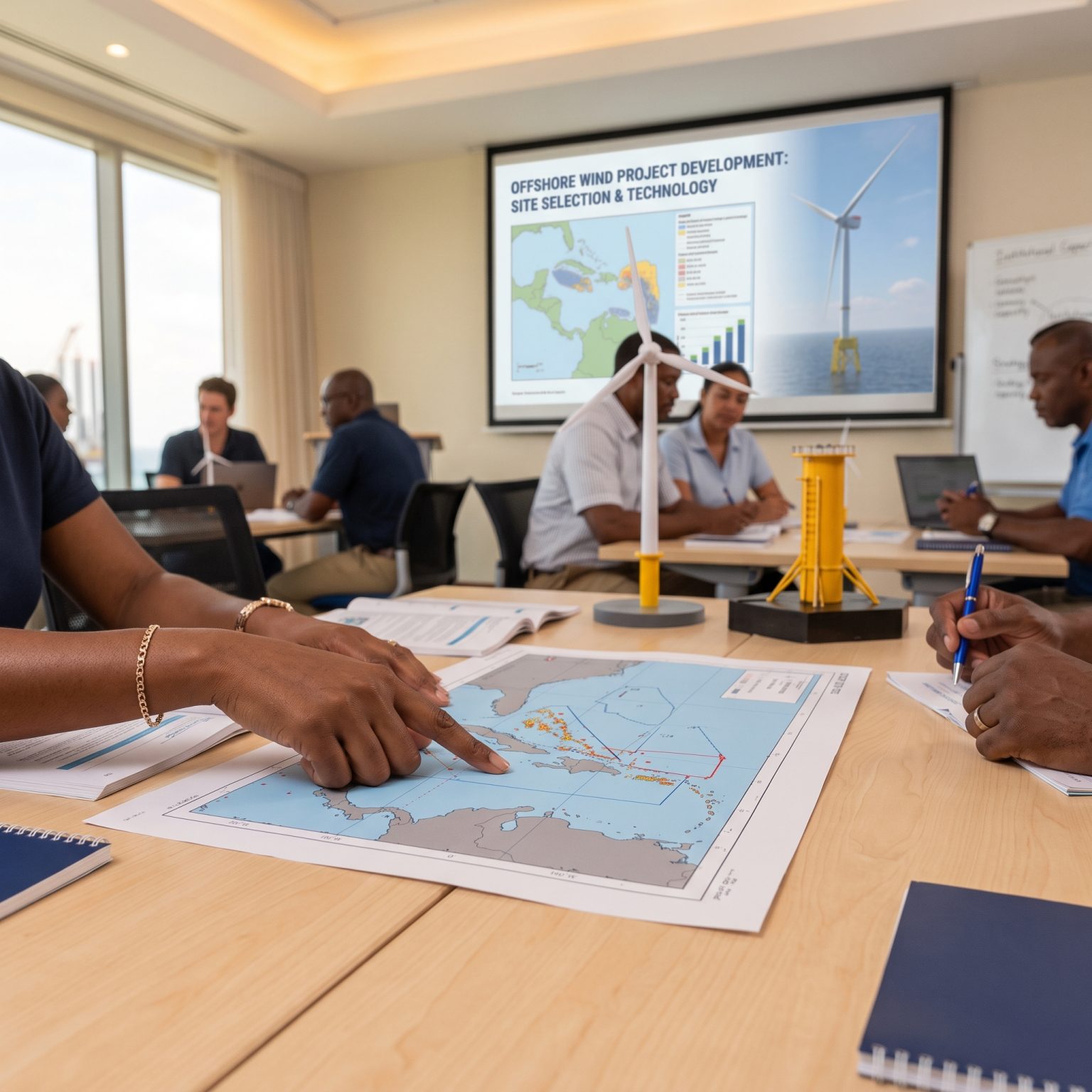
Offshore Wind Champions Course
The Offshore Wind Champions Course is a regional capacity-building initiative under the Regional Offshore Wind Strategy and Roadmap, designed to strengthen the knowledge, skills and institutional capacity needed to engage with the rapidly evolving offshore wind sector. The course supports energy professionals, policymakers and key stakeholders across the Caribbean in developing a practical understanding of offshore wind technologies, project development and the wider technical and institutional considerations shaping the sector.
Delivered during both Phase I and Phase II, the course builds on international industry standards and practices while exploring their regional applications. Participants engage with key areas including offshore wind technology, marine spatial planning, project development, grid integration, and environmental and social considerations through expert-led sessions, practical case studies, scenario-based learning, mentoring and peer exchange.
Under Phase II, the course has been strengthened and updated to reflect technological advances, emerging industry practices and evolving regional priorities. By bridging regional ambition with practical application, the Champions Course is strengthening a growing pool of regional expertise and the capacity needed to assess, plan for and participate in future offshore wind opportunities across the Caribbean.
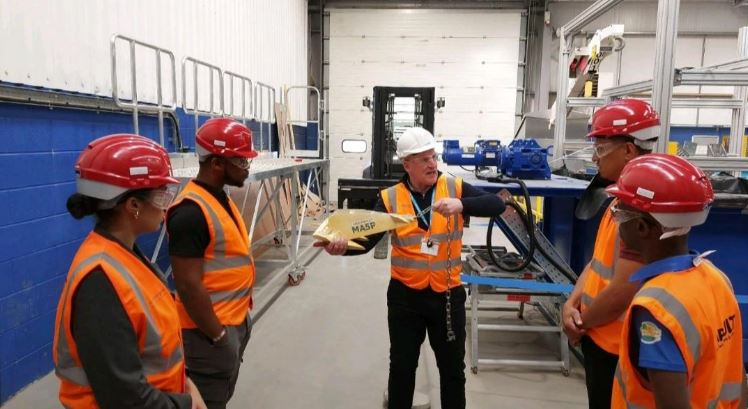
Study Tour, Aberdeen, Scotland: Regional stakeholders engaged in technical knowledge exchange and observed demonstrations of offshore wind equipment testing procedures prior to deployment in the marine environment.
UK, Scotland and Orkney Islands
As part of ROWSAR Phase II, the Study Tour to Scotland and the Orkney Islands connected Caribbean stakeholders with practical experience from the UK’s established offshore wind and marine renewable energy sector. Through site visits, technical sessions and direct engagement with industry experts, participants explored floating and fixed-bottom offshore wind technologies, marine operations, port and logistics infrastructure, supply chains, grid integration, energy storage and emerging renewable energy solutions.
The tour provided first-hand insight into the policy, regulatory, institutional and infrastructure conditions that enable offshore wind development. Engagement with industry, research, technical and regulatory institutions also offered perspectives on grid resilience, energy storage and community engagement, enabling participants to consider how international experience could be adapted to the Caribbean’s unique energy systems, including grid limitations, climate exposure, financing needs and institutional capacity.
These insights are contributing directly to the ongoing Phase II assessment and informing the development of the Investment Case and Prospectus for a potential lighthouse offshore wind opportunity. The tour also strengthens regional knowledge and capacity, helping Caribbean stakeholders draw on international experience to advance future offshore wind development across the region.
Jamaica National Stakeholder Mission
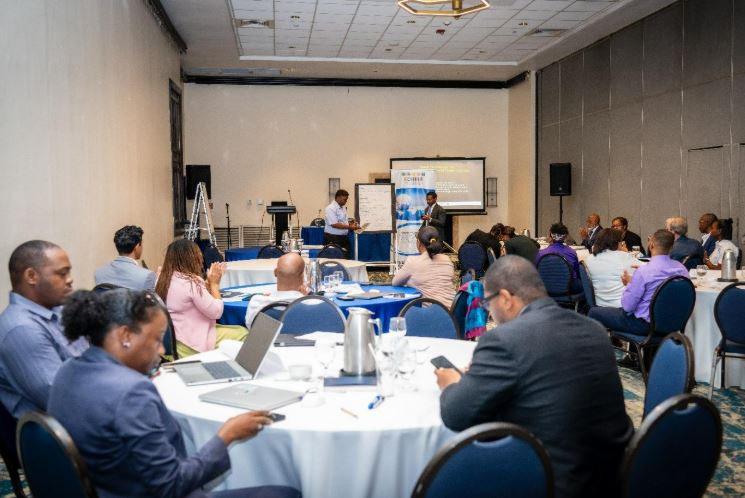
As Phase II moves from regional assessment to country-level analysis, the Jamaica National Stakeholder Mission provided an important opportunity to examine Jamaica’s offshore wind potential and the conditions that could support its future development. The mission brought together stakeholders from government, regulators, utilities, maritime and environmental agencies, the private sector, development partners and technical institutions.
Through technical dialogue and validation of the scoping study findings, stakeholders shared perspectives on the opportunities, constraints and enabling conditions relevant to offshore wind development in Jamaica. Discussions explored areas including marine spatial planning, regulatory frameworks and grid infrastructure, while providing a platform to consider how offshore wind could be integrated within Jamaica’s wider energy transition.
The insights gathered are strengthening the country-level assessment and informing the broader Phase II process to identify a potential regional lighthouse opportunity, while supporting continued dialogue and collaboration among national and regional stakeholders.
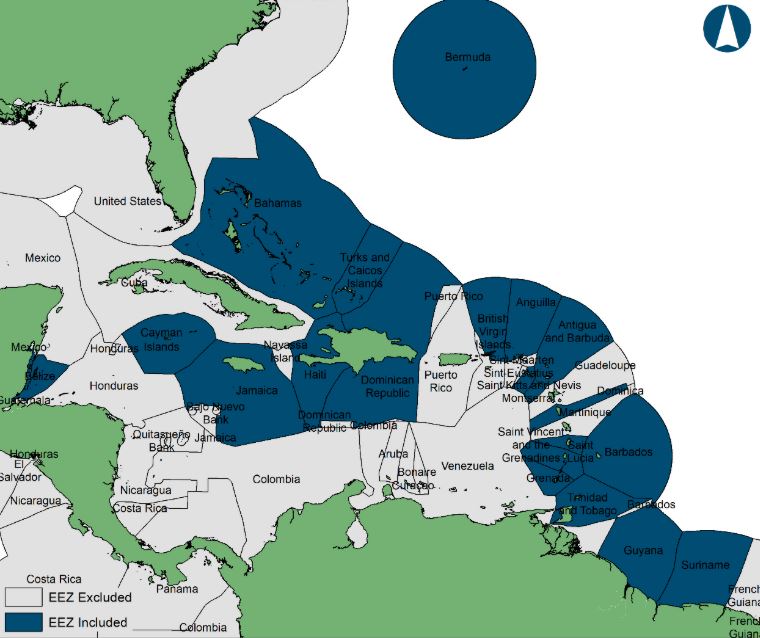
From Regional Potential to a Lighthouse
Driven by data and evidence, ROWSAR is building a clearer picture of where offshore wind can play a meaningful role in the Caribbean’s energy transition. Phase I assessed offshore wind potential across 21 countries, bringing together technical, environmental, infrastructure, regulatory and financing considerations to identify five leading opportunities.
Phase II builds on this regional evidence through deeper country-level analysis, combining technical assessments, stakeholder perspectives and investment considerations to determine where offshore wind has the strongest potential and what conditions are needed to support future development. This process moves the region from broad potential towards a focused lighthouse opportunity, creating a stronger evidence base to guide investment, project development and wider offshore wind advancement across the Caribbean.
Phase I
Regional baseline across 21 countries
Identifying 5 priority nations
Strongest Technical Potential & Enabling Conditions
Project scoping and lighthouse selection
This is a title
Pre-feasibility Analysis Lighthouse site
The evidence-based funnel selection process filters for policy alignment and high-yield offshore wind potential.
Resources & Publications
Access technical assessments, regulatory briefs, and geospatial datasets from the CCREEE OSW Phase II program.
Offshore Wind Grid Integration Study
Assessing grid stability, transmission options, and capacity requirements for integrating 500MW of offshore wind energy into regional grids.
Marine Spatial Planning Regulatory Brief
Wind Resource GIS Mapping Layers
CCREEE OSW Phase II Initiatives
Explore our offshore wind energy study tours, missions, and clean energy developments across the Caribbean through our curated video logs and photographic galleries.
Project in Focus
Jamaica National Stakeholder Workshop
Technical Assessments
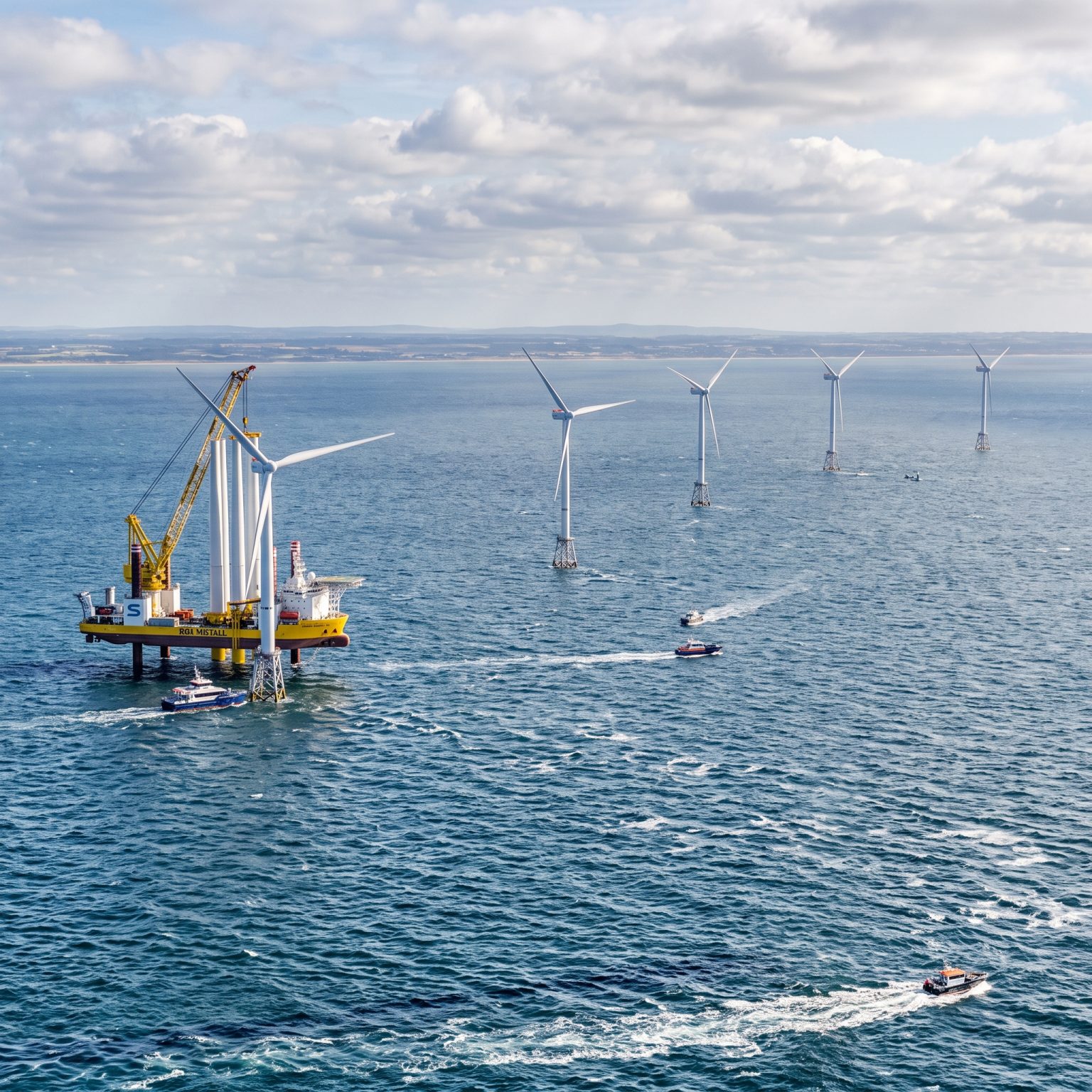
Phase I Regional Offshore Wind Assessment
A comprehensive regional assessment of offshore wind potential across 21 Caribbean countries, evaluating technical potential, environmental and social considerations, infrastructure, regulatory readiness, and financing conditions. The assessment identified five countries with the strongest offshore wind opportunities.
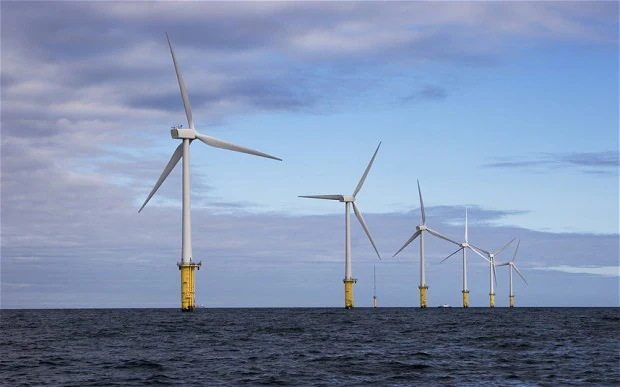
Phase II Scoping Report
Detailed screening of the five shortlisted countries to identify three leading offshore wind opportunities based on resource potential, development conditions, and overall readiness for further assessment.
Phase II Comparative Analysis Report
Comparative assessment of the three shortlisted opportunities, evaluating their relative potential and enabling conditions to identify one leading opportunity for the next stage of Lighthouse Project selection.
News, Updates & Events
LiDAR Wind Resource Measurement Campaign Launches
We have successfully anchored the first round of offshore LiDAR measurement systems. These units will record crucial high-resolution wind velocity profile data to validate turbine yield models across target marine zones.
September 2024 • Engagement Forum
First Multi-Stakeholder Marine Planning Dialogue
Energy ministers, utility regulators, and conservation representatives gathered to align on spatial planning frameworks, ensuring offshore wind zone candidates minimize ecological footprint while maximizing output.
August 2024 • Regulatory Milestones
Drafting of Regional SIDS Policy Guidelines
Our legal and technical committees have initiated draft policies addressing tariff structures, grid integration capabilities, and harmonized code protocols for small island grids.
Contact Us
- Trinity Business Centre Country Road St. Michael, BB11081 Bridgetown Barbados
- info@ccreee.org
- +1 (246) 537-7333